

This documentation is for Stitch.js (v4) SDK, which is now the recommended version for integrating Fasten Connect into your application.
If you need access to the previous versions, please see v1 documentation or v3 documentation.This version includes compatibility with additional runtime environments (Web, React Native, React etc), improved performance, and additional features.v4 is backwards compatible with v3 — there are no breaking changes to the public API, but we have made significant improvements to the underlying codebase and architecture. If you are currently using v3, you can upgrade to v4 without making any changes to your code.The v1 Web Component and v3 Web Component are in maintenance mode and will no longer receive updates (outside of security fixes).
Please update your code to use the new version.
<fasten-stitch-element> component, but designed specifically for React Native. You can provide a familiar mobile
flow without maintaining a web surface. It forwards the same event
payloads that the Web Component emits.
Installation
npx pod-install so iOS picks up the native dependencies. Expo Managed apps only need to
rebuild if you add the optional native module for secure storage.
Basic usage
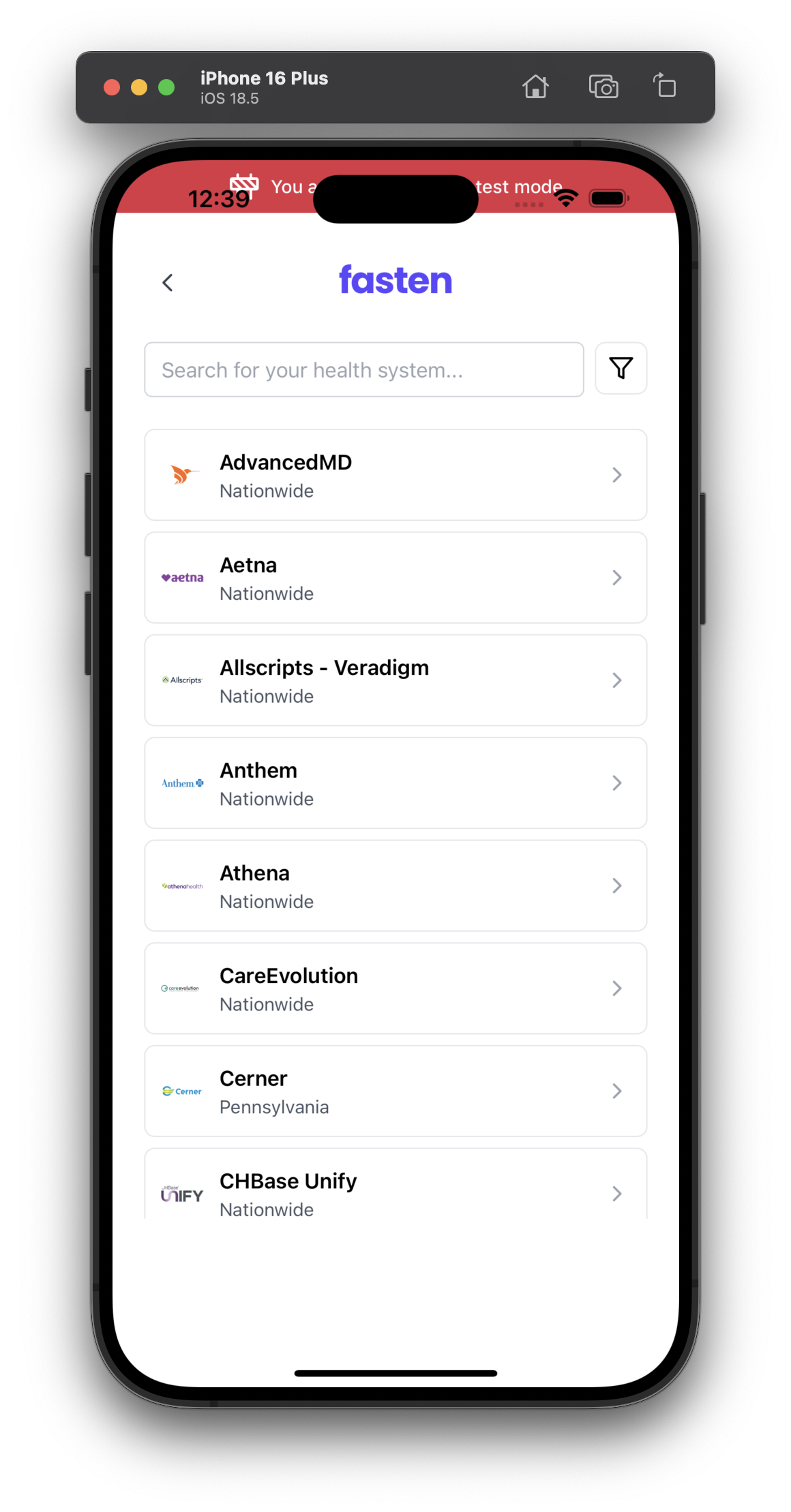
isVisible state so you can toggle
secondary UI (disabling buttons, showing spinners, etc.).
Basic usage (TEFCA Mode)
TEFCA IAS Developer Guide
When TEFCA mode is enabled, developers can access medical records without requiring the patient to search for their healthcare providers, or login to multiple portal logins.Instead the patient is prompted to verify their identity and Fasten Connect will automatically retrieve their medical records from any healthcare institution that participates in the TEFCA network.
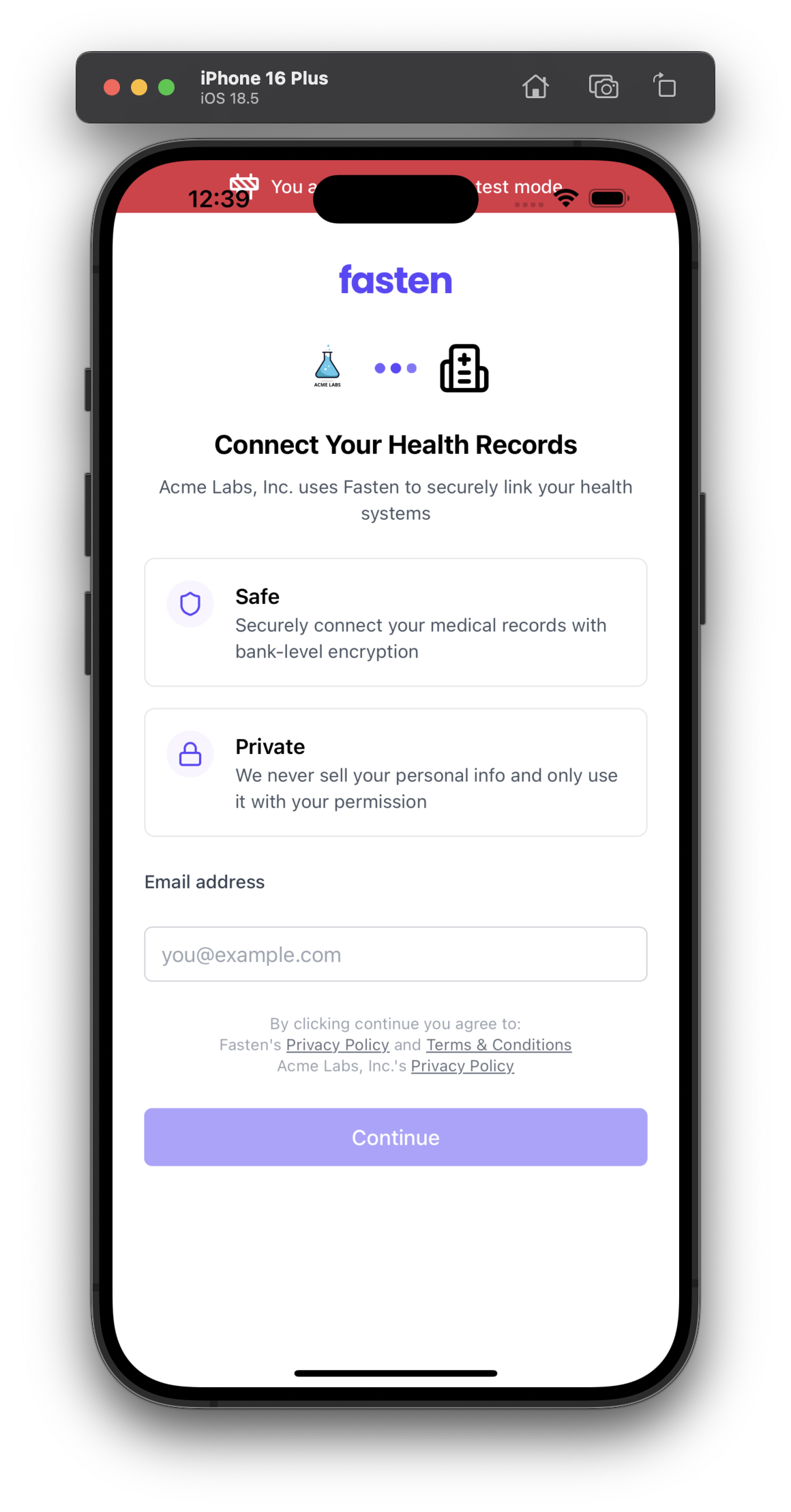
tefcaMode="true" configuration option.
The remaining installation steps are the same as above, just with the additional attribute.
This is intentionally designed to be as simple as possible to get started with TEFCA IAS.